The lipedema It is a chronic alteration of adipose tissue that mainly affects women and usually manifests itself through a disproportionate and symmetrical accumulation of fatty tissue, especially in the legs, hips and, in some cases, arms.
Although at first glance it can be confused with weight gain or a fluid retention, lipedema is a different condition and requires specific evaluation.
One of the most frequent problems is precisely its confusion with obesity. A person can eat a balanced diet, exercise and lose weight in other areas of the body while maintaining an obvious disproportion in the legs.
Understand What is lipedema, what are its main characteristics and how to differentiate it from obesity and fluid retention It is important to seek an appropriate professional assessment and adopt care strategies adapted to each case.
What is lipedema?
Lipedema is a chronic disease of adipose connective tissue characterized by an abnormal distribution of fatty tissue, especially in the lower extremities.
Current consensus guidelines describe a disproportionate accumulation of adipose tissue that usually affects the hips, buttocks, and legs bilaterally and symmetrically. It can also occur in the arms.
Although adipose tissue is one of its most visible characteristics, lipedema should not be considered simply as "having more fat in your legs."
The available evidence indicates that there are differences in the structure and behavior of the tissue associated with lipedema compared to the usual adipose tissue of obesity.
Additionally, in some people they may appear:
- pain or tenderness when touching the legs;
- feeling of heaviness;
- ease of developing bruises;
- disproportionate increase in leg volume;
- changes in tissue texture;
- mobility limitations in more advanced cases.
The intensity and combination of these signs can vary considerably between people.
Where does lipedema usually appear?
One of its most recognizable characteristics is its body distribution.
The tissue associated with lipedema is usually concentrated symmetrically in:
- hips;
- glutes;
- thighs;
- knees;
- calves;
- and, in certain people, arms.
In the legs, the feet are usually relatively preserved, something that can help in the differential clinical assessment compared to other types of edema, although the diagnosis should never be made solely on the basis of this sign.
It is common to see a disproportion between the trunk and lower body.
For example, a woman may have a relatively narrow waist while her hips, thighs, and legs maintain a considerably larger volume.
Why does lipedema appear?
There are still aspects of its origin that continue to be investigated.
It is mainly observed in women and its appearance or progression has been related to stages characterized by hormonal changes, such as:
- puberty;
- pregnancy;
- menopause.
Current consensus guidelines also recognize that the mechanisms involved are complex and that more research is still needed to fully understand the origin and evolution of lipedema.
That is why it is important to avoid overly simplistic explanations.
Lipedema cannot simply be attributed to eating too much, not exercising enough, or being overweight.
Lipedema and obesity: they are not the same
This is possibly one of the most important confusions.
The Lipedema is not simply obesity located in the legs.
Obesity is characterized by an excessive accumulation of adipose tissue that can be distributed throughout different parts of the body.
On the other hand, lipedema presents a characteristic and disproportionate body pattern.
The most recent international recommendations consider lipedema a different entity from obesity, although both conditions can coexist in the same person.
Can a person have lipedema and obesity at the same time?
Yes.
Having lipedema does not prevent you from developing obesity, and a person with obesity can also have lipedema.
This can make it more difficult to identify.
Therefore, the assessment should not focus solely on weight or body mass index.
Tissue distribution, symptoms, history, and physical examination are of critical importance.
Why doesn't losing weight always change your legs in the same way?
Another characteristic described in lipedema is that the affected tissue may respond differently to conventional weight loss strategies.
A person may lose volume in the abdomen, torso or face while the disproportion of the extremities remains more visible.
Clinical guidelines point out that tissue associated with lipedema may be relatively resistant to reduction through diet and exercise compared to conventional adipose tissue.
This does not mean that a balanced diet and physical activity are not important.
Maintaining a healthy weight, preserving mobility and performing adapted exercise continue to be relevant aspects of general care.
The difference is in understanding that The persistence of leg volume does not necessarily demonstrate a lack of effort or discipline.
Lipedema and fluid retention: are they the same?
Neither.
The fluid retention or edema It consists of an accumulation of fluid in the tissues.
It can appear temporarily for multiple reasons and cause symptoms such as:
- swelling;
- feeling of heaviness;
- sock brands;
- temporary increase in the volume of the ankles or legs.
Airecover already extensively addresses this difference in its content on fluid retention, where it explains that bloating can be related to numerous factors and should not automatically be interpreted as body fat.
Lipedema, on the other hand, involves specific alterations of adipose and connective tissue.
There may be an edema component in people with lipedema, but having swollen legs does not necessarily mean having lipedema.
Differences between lipedema, obesity and fluid retention
Although they may share certain external signs, there are important differences.
Lipedema
It usually shows a disproportionate and symmetrical distribution of adipose tissue, especially in the legs and hips. It may be accompanied by sensitivity, pain, easy bruising, and a feeling of heaviness.
Obesity
The accumulation of fat usually affects the body more generally, although its distribution varies between people.
fluid retention
It is fundamentally related to an accumulation of fluid in the tissues and the swelling can fluctuate considerably depending on the cause.
Furthermore, these conditions can coexist, so trying to identify them only by looking at the appearance of the legs can lead to wrong conclusions.
What are the most common symptoms of lipedema?
Not all people have exactly the same symptoms.
Some more frequently described signs are:
Symmetrical increase in leg volume
Both legs are usually affected in a relatively similar way.
Body disproportion
There may be an obvious difference between the volume of the trunk and that of the hips, thighs and legs.
Pain or tenderness
The affected tissue may be sensitive to touch or painful, although this symptom is not necessarily present in all people.
Frequent appearance of bruises
The fragility of small blood vessels can lead to bruising more easily.
Feeling of heavy legs
Some people describe tiredness, pressure or heaviness, especially at the end of the day.
Difficulty in reducing certain areas
Weight changes may be more evident in the trunk than in areas affected by lipedema.
How do I know if I have lipedema?
There is no reliable method to self-diagnose by simply looking at photographs, comparing leg sizes, or performing home tests.
The diagnosis is fundamentally clinical and requires a professional assessment that takes into account:
- tissue distribution;
- symmetry;
- symptoms;
- medical record;
- evolution;
- possible vascular or lymphatic diseases;
- presence of other associated conditions.
Clinical guidelines also highlight the importance of differentiating lipedema from obesity, lymphedema, venous disease, and other problems that can cause increased extremity volume.
If you suspect that you may have lipedema, it is best to see a healthcare professional with experience in this condition.
Can fluid retention appear along with lipedema?
Yes.
Although lipedema and fluid retention are different concepts, a person with lipedema may present alterations related to edema and the lymphatic system.
In certain advanced cases, lymphedema may also coexist, a situation commonly called lipolymphedema.
This explains why some conservative treatment strategies are aimed not only at adipose tissue, but also at controlling symptoms such as swelling, pain or heaviness.
How is lipedema treated?
Treatment must be individually adapted and supervised by healthcare professionals.
Conservative strategies described in the guidelines may include:
- adapted exercise;
- weight control and healthy eating;
- compression garments;
- manual therapy techniques;
- skin care;
- sequential pneumatic compression devices in certain people;
- professional follow-up.
The goal of conservative treatment usually focuses on controlling symptoms, maintaining mobility, and improving quality of life.
What role can pressotherapy have in people with lipedema?
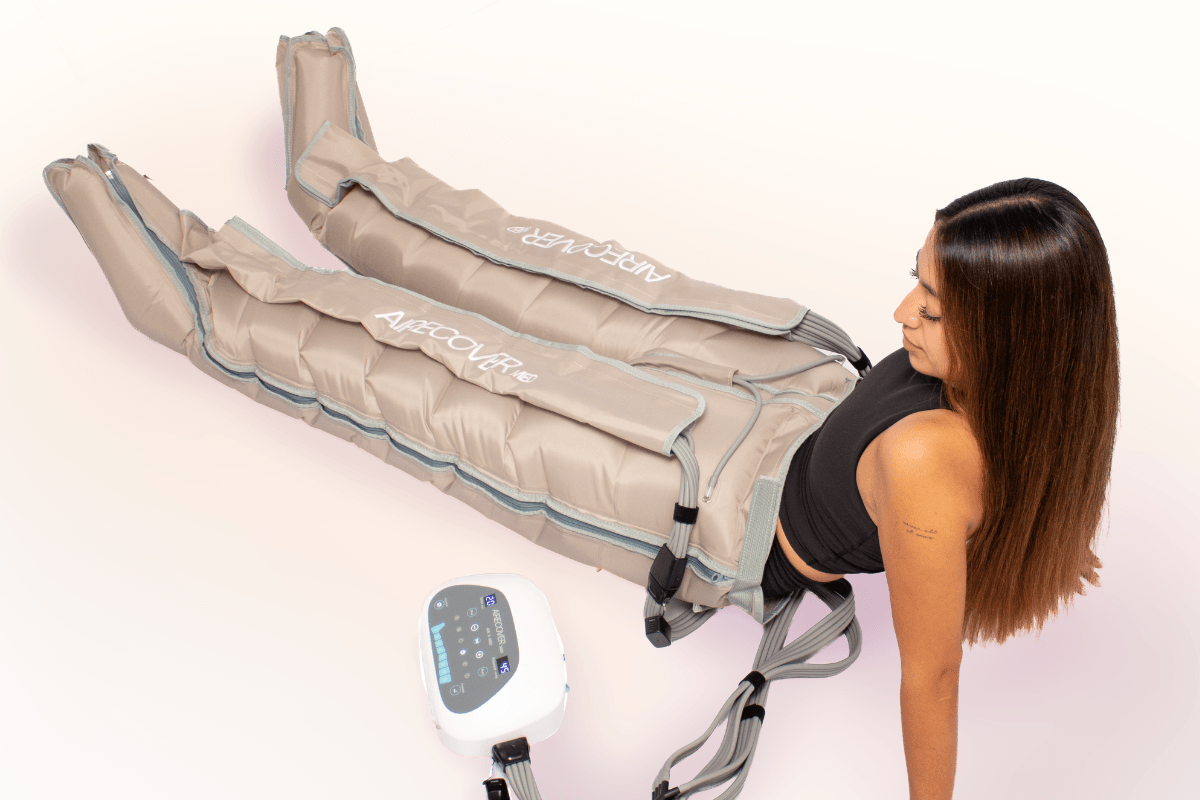
The pressotherapy It uses air chambers that inflate and deflate in a sequence to apply pneumatic compression to the extremities.
Pneumatic compression devices appear among the options that can be part of the conservative treatment of certain people with lipedema. However, the indication and configuration must be individualized.
Therefore, pressotherapy should not be presented as a cure for lipedema.
It can be part of a broader strategy aimed at managing certain symptoms when a professional considers it appropriate.
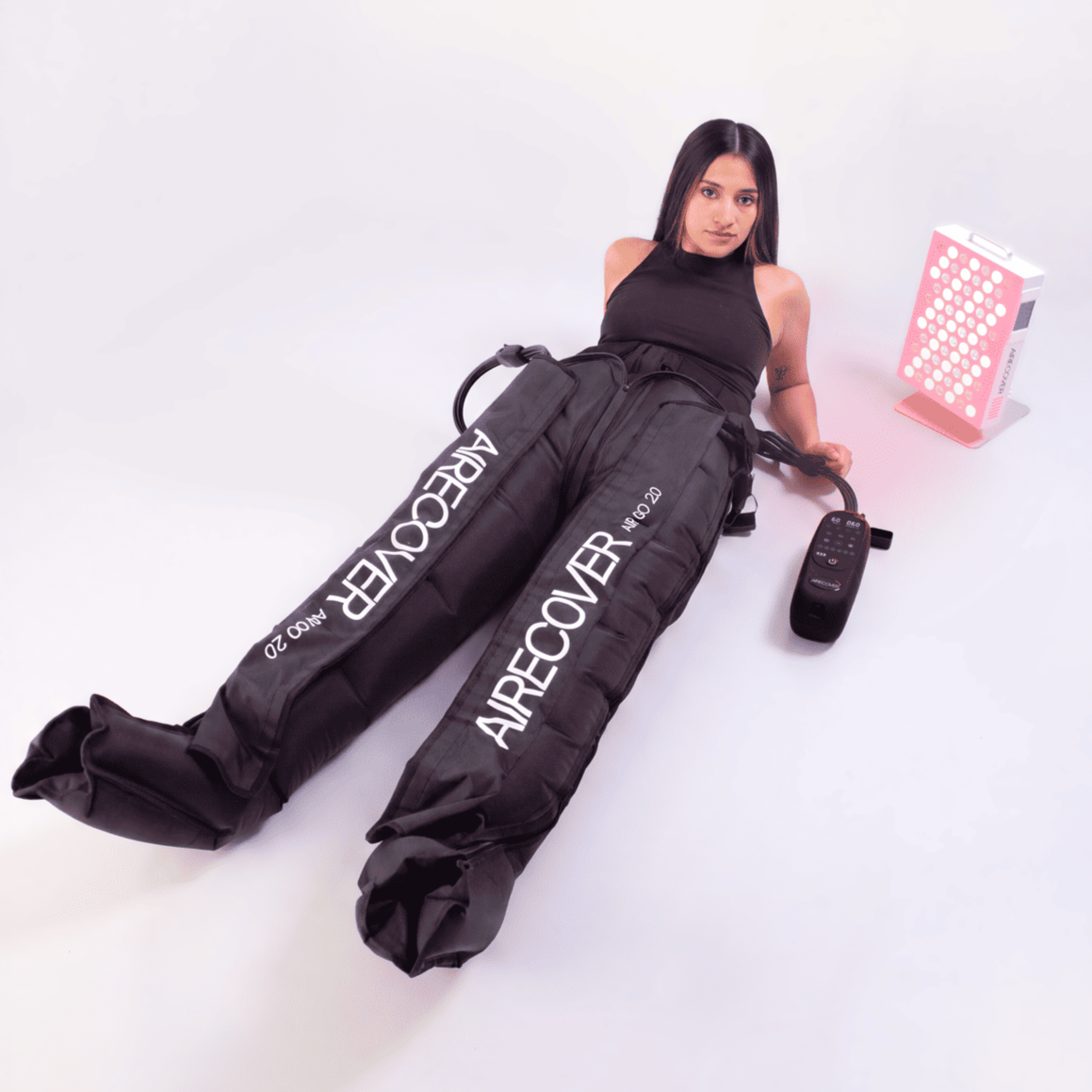
At Airecover there are medical pressure therapy equipment with different camera configurations and formats. The range itself includes pants that cover from the feet to the abdomen, such as Airecover Med 6.0 Pants and Med 8.0 Pants.
If you want to first understand how this technology works, you can also consult our guide on What is pressotherapy and how does it work?.
Pressotherapy boots or pants?
The choice depends mainly on the area you want to cover and the recommendations made for each case.
Boots tend to focus primarily on the lower extremities.
The pressotherapy pants They can expand coverage from the feet to the hips and abdomen.
For people interested in lipedema, Airecover currently has 6- and 8-chamber Med Pants models, designed to provide extensive coverage of the lower extremities.
However, more chambers or higher pressure do not automatically mean that a device is more suitable.
The configuration must be adapted to each person.
Lipedema should not be reduced to a matter of weight
One of the most important ideas is to understand that lipedema It is not simply a weight problem or conventional fluid retention.
Its characteristic distribution, tissue alterations and symptoms such as sensitivity, pain, bruising or heaviness allow it to be differentiated from other problems, although only a professional can make an adequate assessment.
Additionally, lipedema, obesity, and edema may coexist.
Therefore, when there is a persistent disproportion between the legs and the rest of the body or compatible symptoms appear, it is more useful to seek a specialized assessment than to try to explain it solely by body weight.
Correctly understanding lipedema allows for more informed decisions about exercise, daily habits, compression, and other support tools.
Frequently asked questions about lipedema
Is lipedema the same as obesity?
No. It is currently considered a different condition from obesity, although both can appear simultaneously.
Is lipedema simply fluid retention?
No. Fluid retention corresponds to an accumulation of fluid in the tissues, while lipedema presents characteristic alterations of adipose and connective tissue.
Does lipedema only appear in the legs?
The legs, hips and buttocks are the most characteristic areas, although it can also affect the arms.
Can lipedema hurt?
Yes. Pain and sensitivity are common, although not all people experience pain and its absence does not automatically rule out the condition.
Can lipedema be eliminated only by losing weight?
Weight reduction may be important for overall health when overweight or obese, but the tissue associated with lipedema may respond differently to conventional weight loss.
Does pressotherapy cure lipedema?
No. Pressotherapy should not be considered a cure. Pneumatic compression can be part of conservative management for certain people, as long as it is appropriate for their situation and following professional guidance.
What should I do if I suspect I have lipedema?
It is advisable to request a specialized health assessment. Differentiating lipedema from obesity, lymphedema, venous disease, or other causes of increased leg volume requires proper evaluation.