Fluid retention and anxiety: how stress affects your body more than you imagine
Do you feel bloated for no apparent reason? Do you notice heaviness in your legs, swollen abdomen or sock marks at the end of the day, especially during times of stress? It's not a coincidence.
The relationship between fluid retention and anxiety It is more common than many people believe. Although we usually associate fluid retention with diet, hormones or a sedentary lifestyle, the emotional state also directly impacts how the body regulates fluids, inflammation and circulation.
What is fluid retention?
Fluid retention, also called edema, occurs when the body accumulates excess water in the tissues.
- Legs and ankles
- Abdomen
- hands
- face
- Arms
Common symptoms
- Bloated feeling
- Temporary body volume increase
- Heavy legs
- tight clothing brands
- Rapid weight fluctuations
Can anxiety cause fluid retention?
Yes, indirectly. Anxiety activates physiological mechanisms that promote retention.
When we experience stress or anxiety, the production of:
- Cortisol
- Adrenaline
- Norepinephrine
The role of cortisol
Cortisol, known as the stress hormone, when elevated can cause:
- inflammation
- sodium alteration
- Water imbalance
- fluid retention
More sodium retained means more water retained.
Stress, inflammation and lymphatic system
The lymphatic system is key to draining fluids and toxins.
- Less physical activity
- Worse circulation
- Rest disturbance
- Increased systemic inflammation
All of this slows down lymphatic drainage and promotes fluid accumulation.
Habits associated with anxiety that worsen retention
emotional eating
During anxiety episodes it is common to consume products rich in sodium, sugar and ultra-processed.
Sedentary lifestyle
Spending many hours sitting worsens venous return and circulation.
Bad rest
Lack of sleep further increases cortisol and perpetuates inflammation.
Less hydration
Drinking little water can cause the body to retain more fluids as a compensatory mechanism.
How to reduce fluid retention caused by anxiety
1. Manage stress
- Diaphragmatic breathing
- Mindfulness
- Psychological therapy
- Active breaks
2. Move daily
- walk
- Joint mobility
- Leg raise
3. Anti-inflammatory diet
Prioritize fruits, vegetables, proteins and healthy fats.
- Reduce excessive salt
- Reduce ultra-processed foods
- Reduce alcohol
4. Drink enough water
Between 1.5 and 2 liters per day as a general reference.
5. Sleep better
Adequate rest regulates hormones and recovery.
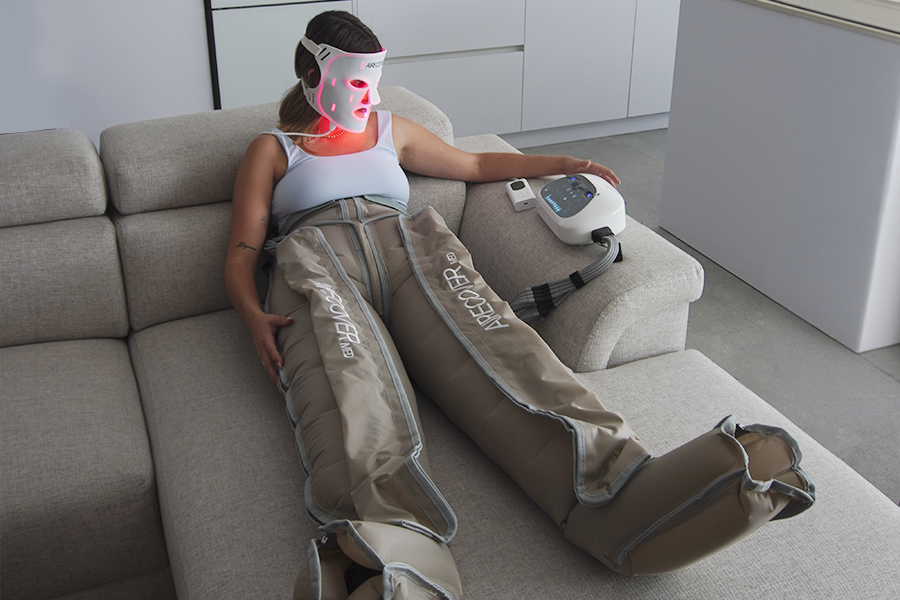
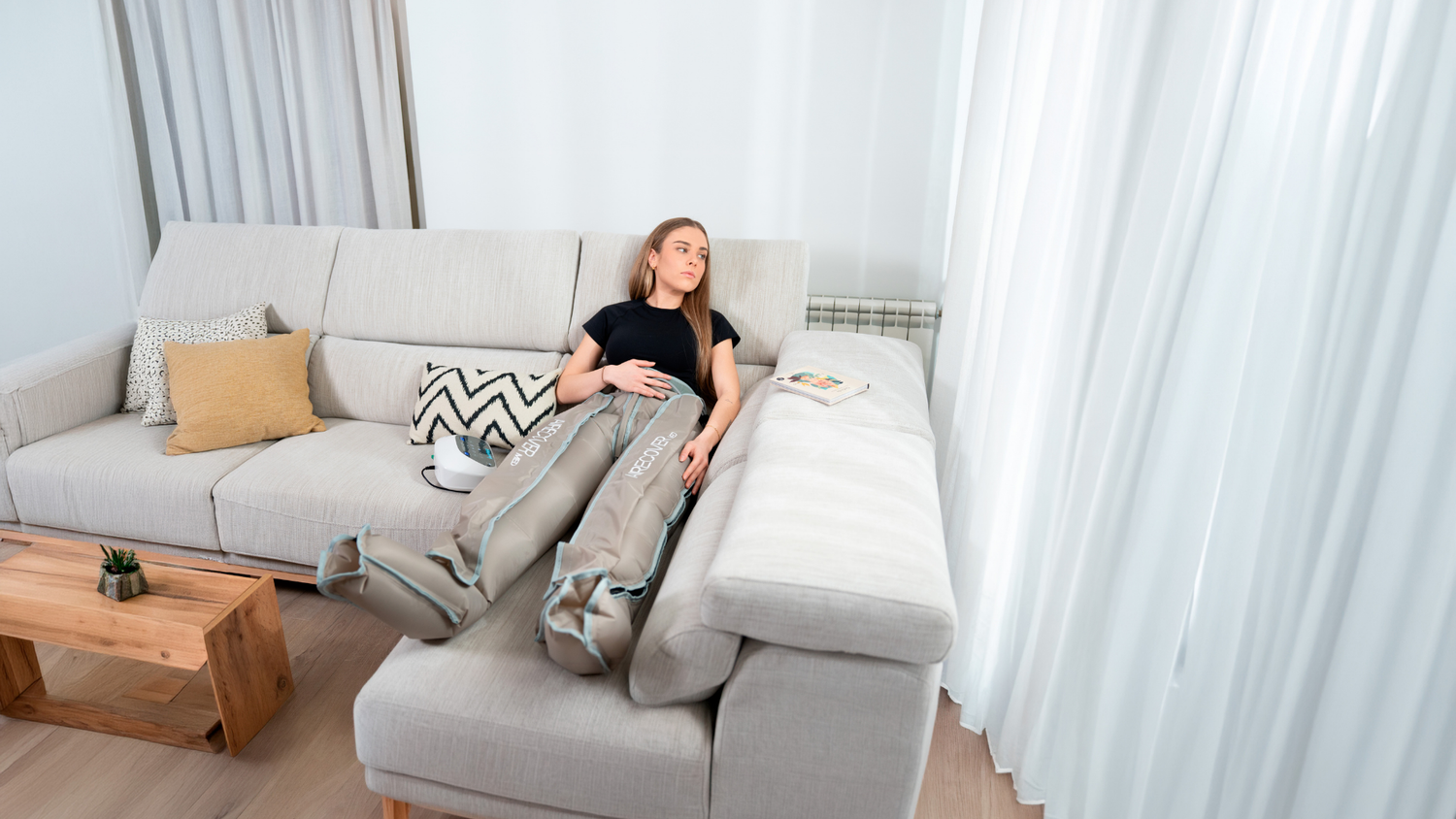
Pressotherapy at home for fluid retention
The pressotherapy at home helps stimulate:
- blood circulation
- venous return
- lymphatic drainage
Benefits
- Reduces swelling
- Relieves tired legs
- Improves circulatory well-being
- Promotes recovery
Airecover: professional pressotherapy at home
At Airecover we design pressotherapy equipment to help you reduce fluid retention, relieve tired legs and improve circulation without leaving home.
Discover how to incorporate pressotherapy into your daily routine and feel lighter and deflated.
Frequently asked questions
Does anxiety cause fluid retention?
Yes, it can promote it through elevated cortisol, inflammation and circulatory disorders.
Does pressotherapy help with retention?
Yes, it helps mobilize accumulated fluids and improve lymphatic drainage.
How to eliminate fluids retained due to stress?
Manage anxiety, move, hydrate and support lymphatic drainage.